
Dithering has two meanings. The first is what I’ve been doing lately, although I have submitted my latest Institute of Public Affairs Reviewcolumn, plus a lengthy piece to Australian HI-FI on … dithering. In this latter context dither is noise added to digital audio to reduce other problems. Being a true gentleman, Greg Borrowman, the editor of Australian HI-FI, has not only purchased this article but granted me permission to simultaneously post it here. For your edification. But do buy the magazine when it comes out. Aside from the graphics being more detailed in my piece, and it including my DVD reviews on Adaptation and Being John Malkovich, it will have lots of great stuff not written by me.
 Sorry dear reader, I’ve been on a few deadlines. Reviews of various digital set top boxes and the
 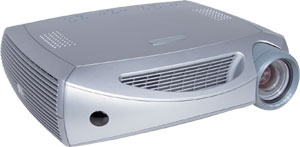 In September InFocus will release its ScreenPlay 5700 projector in Australia. Could this be the perfect home theatre projector? It uses what is apparently Texas Instrument’s newest DMD, the Matterhorn. I say apparently because TI has seen fit not to mention it on its
  The poor freelance audio writer simply cannot afford to buy all the test gear he would like. Golly, even something as mundane as 250 watt 8 ohm resistors for testing power outputs cost around $AUS100 each … and this writer has seven of the damned things. I’d love a high-end digital storage oscilliscope, but have to make do with a cheap analogue one (still $AUS1,000). And as for measurements: well, it’s just as well that I’m a dab hand at basic mathematics!
 A couple of nights ago I installed CyberLink’s new
 -
Feel free to email me at scdawson [at] hifi-writer.com. I shall assume that emails sent to me here can be freely posted by me unless you state otherwise. -
Recent Posts
Recent comments
- Chris on A Decade of Tuning Tips (Part Two) – 3
- Simon Heaton on Raiders of the Lost Ark Blu-ray quality: photography issues or encoding?
- Paul Mclean on Stephen Dawson – CV
- Stephen Dawson on Blu-ray frame rates
- Bob whitfield on Blu-ray frame rates
Blogroll
On This Site
Categories
Archives
- February 2017 (1)
- July 2016 (3)
- June 2016 (1)
- February 2016 (2)
- January 2016 (3)
- March 2015 (1)
- February 2015 (4)
- January 2015 (2)
- August 2014 (3)
- July 2014 (2)
- May 2014 (1)
- March 2014 (2)
- February 2014 (2)
- January 2014 (2)
- November 2013 (7)
- September 2013 (2)
- August 2013 (4)
- July 2013 (1)
- June 2013 (2)
- May 2013 (2)
- April 2013 (7)
- March 2013 (4)
- February 2013 (11)
- January 2013 (6)
- December 2012 (4)
- November 2012 (1)
- October 2012 (2)
- September 2012 (4)
- August 2012 (7)
- July 2012 (5)
- June 2012 (9)
- May 2012 (12)
- April 2012 (15)
- March 2012 (8)
- February 2012 (5)
- December 2011 (4)
- November 2011 (2)
- October 2011 (2)
- September 2011 (7)
- August 2011 (7)
- July 2011 (7)
- June 2011 (9)
- May 2011 (10)
- April 2011 (9)
- March 2011 (11)
- February 2011 (9)
- January 2011 (19)
- December 2010 (16)
- November 2010 (11)
- October 2010 (17)
- September 2010 (13)
- August 2010 (31)
- July 2010 (26)
- June 2010 (17)
- May 2010 (10)
- April 2010 (28)
- March 2010 (38)
- February 2010 (21)
- January 2010 (10)
- December 2009 (6)
- November 2009 (4)
- October 2009 (24)
- September 2009 (17)
- August 2009 (7)
- July 2009 (4)
- June 2009 (15)
- May 2009 (3)
- April 2009 (14)
- March 2009 (8)
- February 2009 (18)
- January 2009 (9)
- December 2008 (4)
- November 2008 (10)
- October 2008 (12)
- September 2008 (7)
- August 2008 (13)
- July 2008 (13)
- June 2008 (8)
- May 2008 (5)
- April 2008 (2)
- March 2008 (2)
- February 2008 (8)
- January 2008 (6)
- December 2007 (6)
- November 2007 (11)
- September 2007 (3)
- June 2007 (3)
- May 2007 (5)
- April 2007 (11)
- March 2007 (1)
- November 2006 (9)
- October 2006 (2)
- September 2006 (1)
- August 2006 (5)
- July 2006 (1)
- June 2006 (6)
- May 2006 (2)
- April 2006 (4)
- March 2006 (3)
- December 2005 (2)
- August 2005 (10)
- March 2005 (4)
- February 2005 (8)
- November 2004 (3)
- October 2004 (6)
- September 2004 (4)
- August 2004 (16)
- May 2004 (5)
- April 2004 (10)
- March 2004 (14)
- February 2004 (16)
- January 2004 (5)
- December 2003 (8)
- November 2003 (8)
- October 2003 (16)
- September 2003 (25)
- August 2003 (24)
- July 2003 (32)
QR Code
QR Code for this Blog. Scan it with your smart phone to be connected wherever you are: